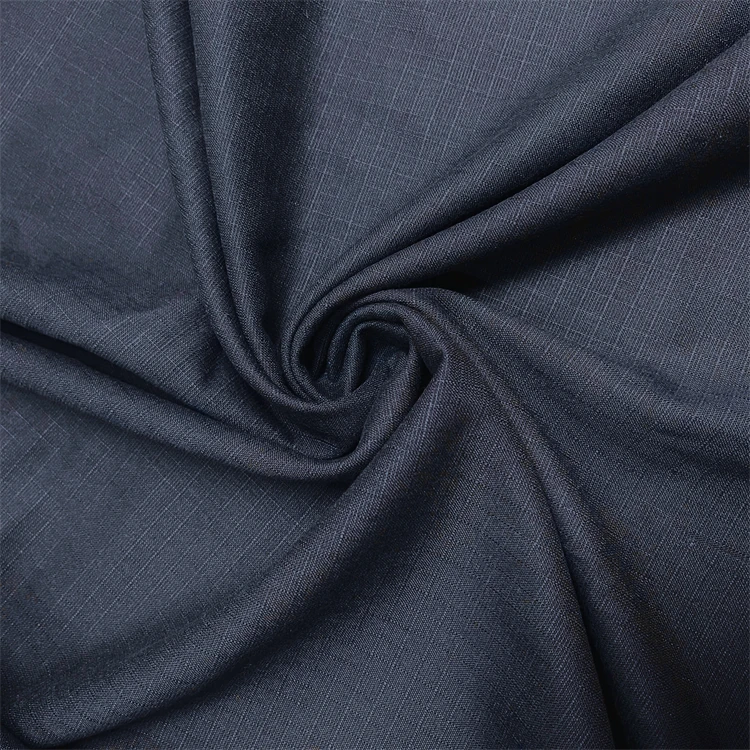
Natural drape
Review the medium-weight body and soft folds when developing travel trousers, camping apparel and overshirts.

Fabric views support texture and color review. Garment and specification illustrations are visual references; compare texture and shade with the approved physical sample. Application concepts do not demonstrate tested performance.
Ripstop Fabric · YA2637
YA2637 is a 190–220 GSM polyester-viscose-elastane woven fabric with a three-yarn ripstop grid and a 57/58-inch width, for outdoor pants, cargo trousers, overshirts and travel vests. Made to order exclusively for apparel brands, garment manufacturers and fabric wholesalers sourcing bulk production. Minimums: 1,200 meters per color and 3,000 meters per order. No ready-stock supply.
Base fabric status: Base fabric: no functional finishing applied. No test reports currently available. Optional treatments and performance targets require feasibility review, sampling and testing.
For an accurate recommendation, include your garment type, target market, required finish and estimated quantity.
Product overview
YA2637 combines a polyester-rich foundation with viscose and a small elastane content. Its subtle three-yarn ripstop grid and matte charcoal appearance bring an outdoor character to garments intended for everyday wear, travel and light outdoor activities.
Viscose contributes to a softer handle and drape, while elastane is included for comfort-stretch development. Stretch direction, extension and recovery are confirmed on the approved sample. The 190–220 GSM range is particularly suited to trouser-led collections, with additional possibilities for structured shirts, overshirts and pocketed vests.
The reference fabric has no applied functional finish and no available test reports. Ripstop describes the construction; tear resistance, abrasion resistance, quick drying, water repellency and UV protection are not verified properties of this base fabric.
Fabric details
Review the medium-weight body and soft folds when developing travel trousers, camping apparel and overshirts.

The subtle rectangular grid gives the fabric its utility character. Grid dimensions and final appearance are confirmed against the approved sample.
Technical data
Reference data for development and quotation. Final tolerances are confirmed on the approved sample.
Core performance
Construction-based characteristics, not laboratory pass claims. Numerical targets can be agreed and tested during development.
A subtle three-yarn grid provides a recognizable outdoor and utility aesthetic. Tear and abrasion performance require testing.
The 190–220 GSM range provides a starting point for trousers, shorts, overshirts and pocketed vests rather than ultralight activewear.
Twenty-six percent viscose contributes to handle and drape. Evaluate next-to-skin comfort and care requirements during sampling.
One percent elastane supports stretch development. No high-stretch or four-way-stretch claim is made; direction and recovery must be checked.
Recommended applications
Application images clarify the intended use while keeping the supplied fabric specification central.
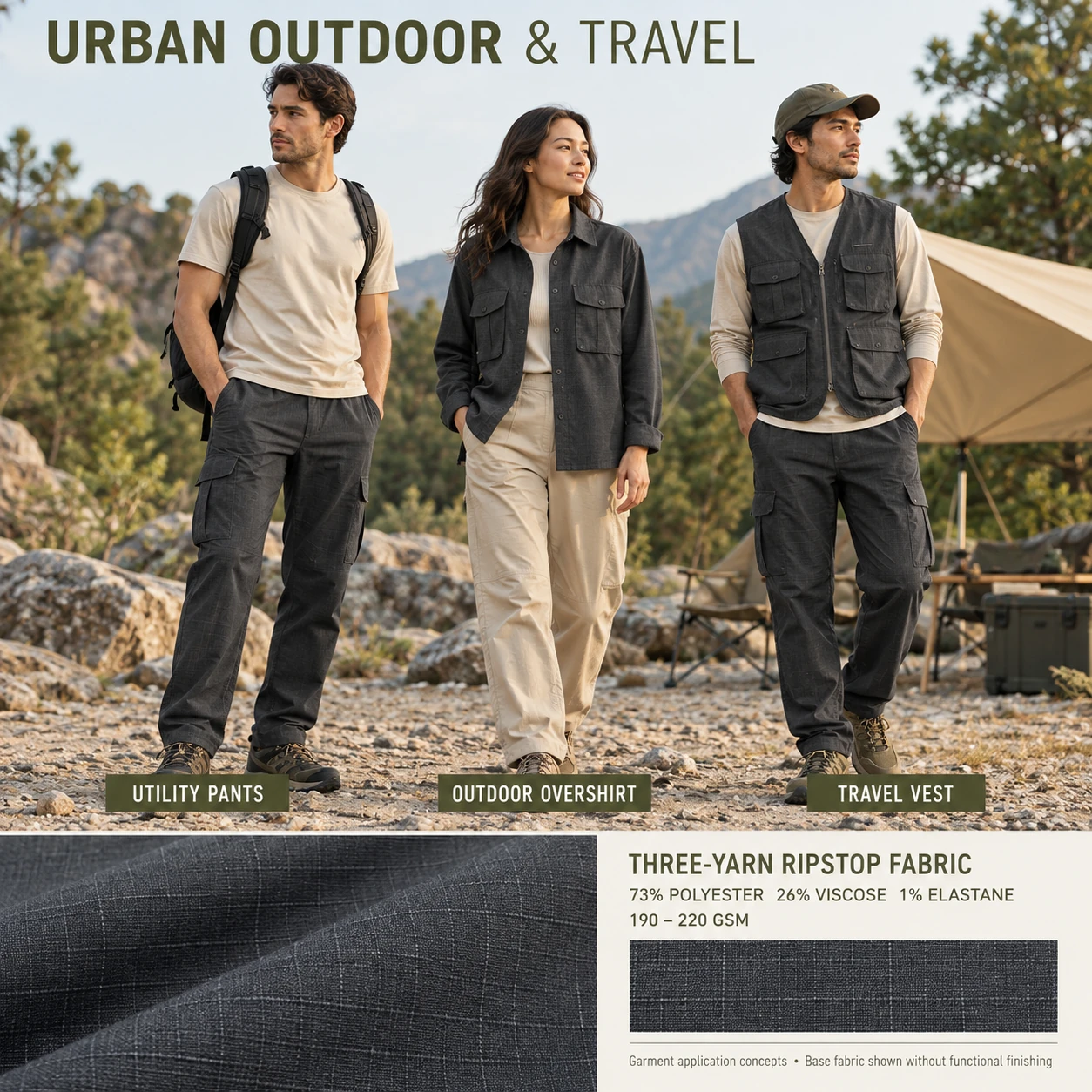
Clean-cut trousers and cargo styles for commuting, travel and light outdoor activity; use pocket layouts and articulated patterning to suit the brief.
Relaxed pants and shorts for camp activities, road trips and casual outdoor collections. Evaluate breathability and drying performance for warm-weather use.
Two-pocket overshirts, layering shirts and pocket-focused vests. Check seam strength, loaded pockets and garment comfort during development.
For short, low-intensity hiking programs subject to assessment of mobility, tear strength, abrasion, breathability and drying speed.
Garment images are application visualizations. Final appearance depends on fabric development, pattern and approved color.
Custom development
Share the intended garment, market and performance target so the construction and finishing route can be evaluated before sampling.
Feasibility, tolerances and production terms are confirmed after specification review.
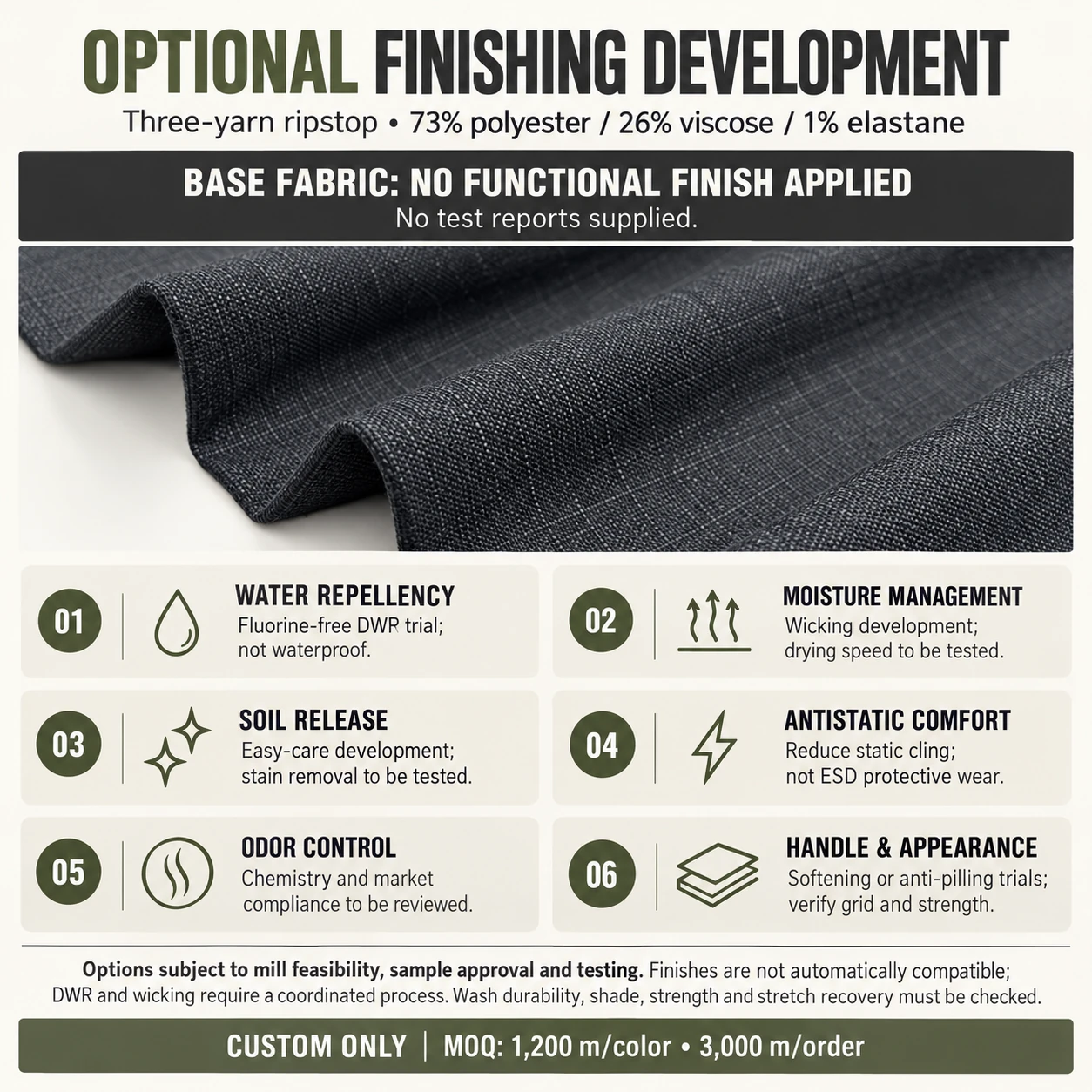
Optional functional finishing
These are optional development routes, not verified properties or guaranteed treatment availability. Mill feasibility, sample approval and testing are required. Finishes are not automatically compatible: DWR and hydrophilic wicking treatments need coordinated process development. Review wash durability, shade, tear and seam strength, pilling and elastic recovery on the final finished fabric.
Explore DWR to reduce surface wetting from light splashes. Confirm initial repellency and wash durability; this does not make the fabric waterproof.
Explore hydrophilic treatments for wetting and moisture transport. Wicking, spreading and drying speed must be tested; quick drying is not a current claim.
Develop easier removal of selected stains during laundering. Confirm stain-specific results and wash durability; soil release is not oil repellency.
Explore reduction of static cling in ordinary wear. Verify under relevant conditions and after washing; no ESD or hazardous-area protective performance is implied.
Review the intended chemistry, efficacy, durability and target-market requirements. No antimicrobial or odor-control claim applies to the current base fabric.
Explore softening or anti-pilling trials while retaining the three-yarn grid. Check changes in shade, strength, hand feel and stretch recovery.
Testing & reports
No test reports are currently available for this base fabric. Agree the required methods and targets before arranging tests on the approved development.
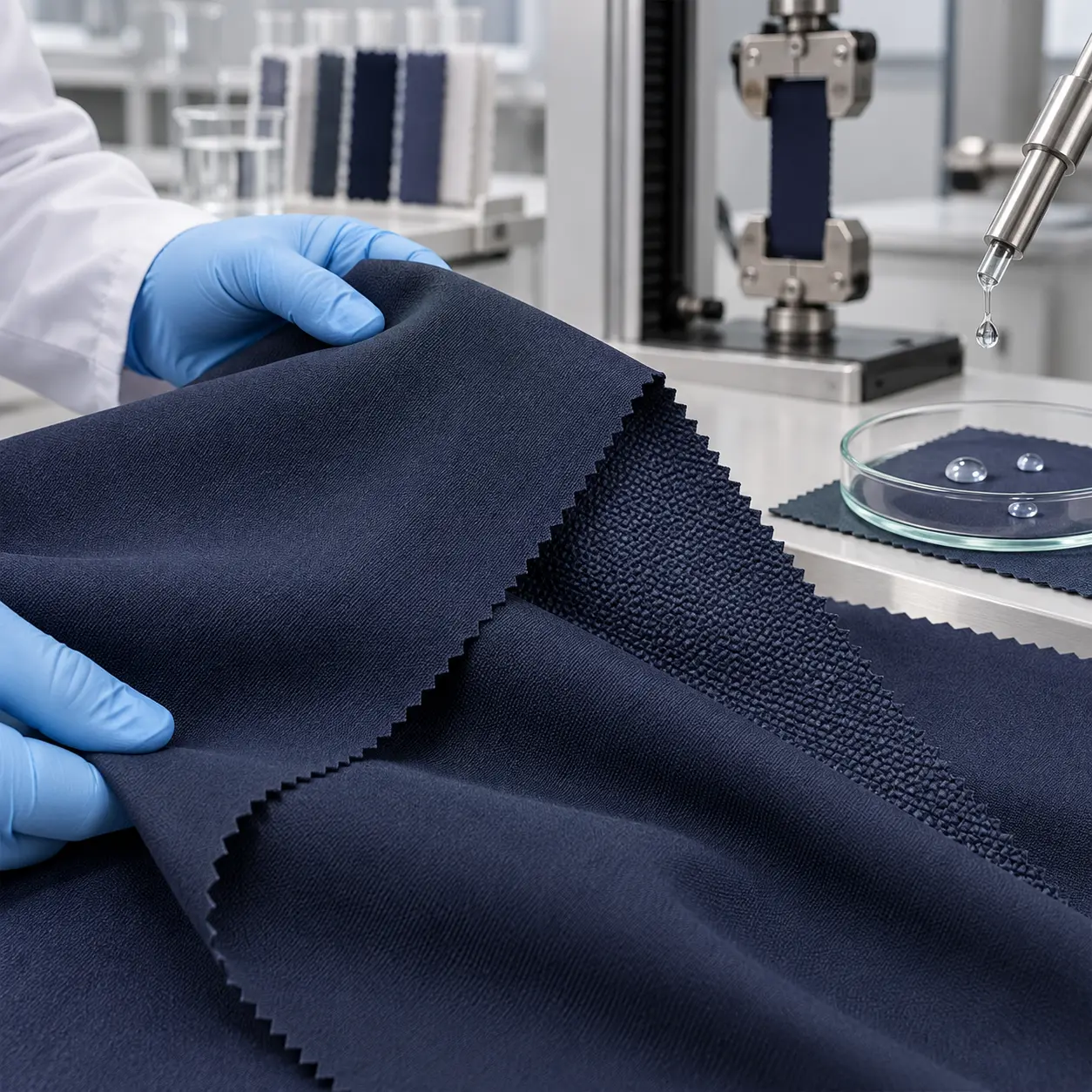
Important: No numerical test result is claimed here. Test standards, targets and reporting arrangements are confirmed for each project.
From inquiry to order
Each stage is confirmed before the next one begins, helping the sample, quotation and bulk fabric stay aligned.
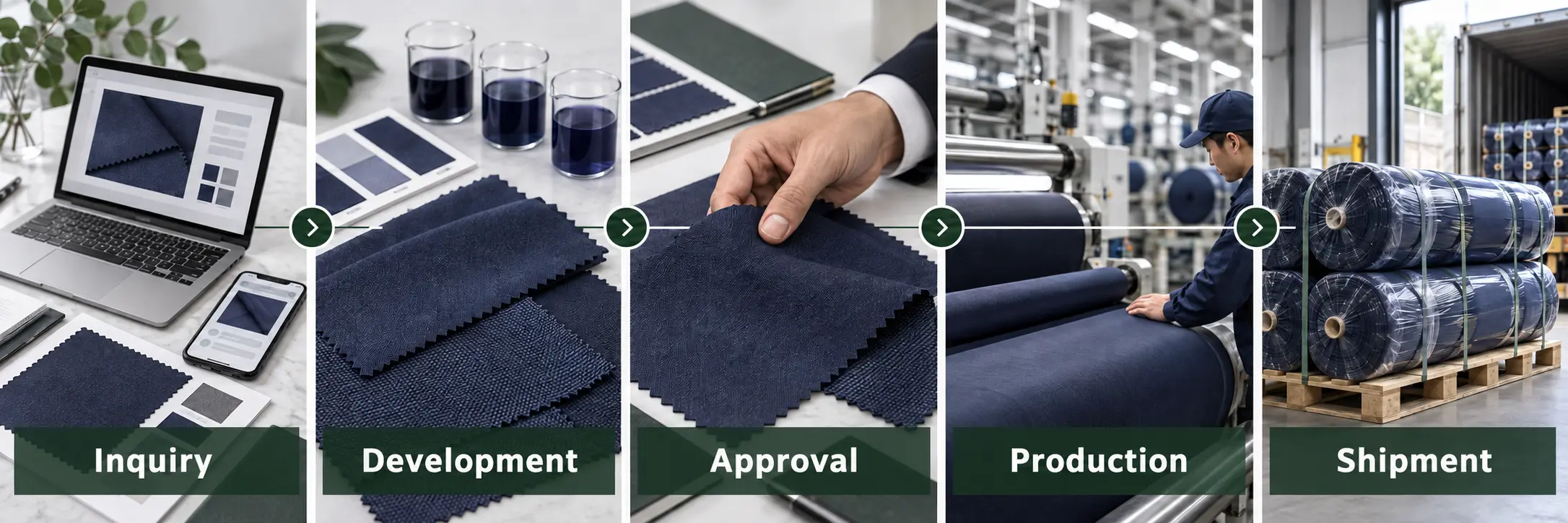
Share garment, color, GSM, finish, quantity and market.
Confirm the proposed specification and quotation.
Approve quality, color and the required test plan.
Begin bulk production against the approved sample.
Inspect, pack and arrange the agreed delivery.
Buyer questions
Yes. YA2637 can be developed around the options shown above. Feasibility and tolerances are confirmed after reviewing the intended garment and target.
1,200 meters per color; 3,000 meters per order.
Yes. We first discuss the intended standard and target, then arrange testing of the developed or approved sample and provide the issued report.
Please include YA2637, intended garment, target color, required weight and finish, destination market, estimated quantity and testing requirements.
Discuss YA2637
Send your target color, finish, application and quantity. We will review the development direction with you.