
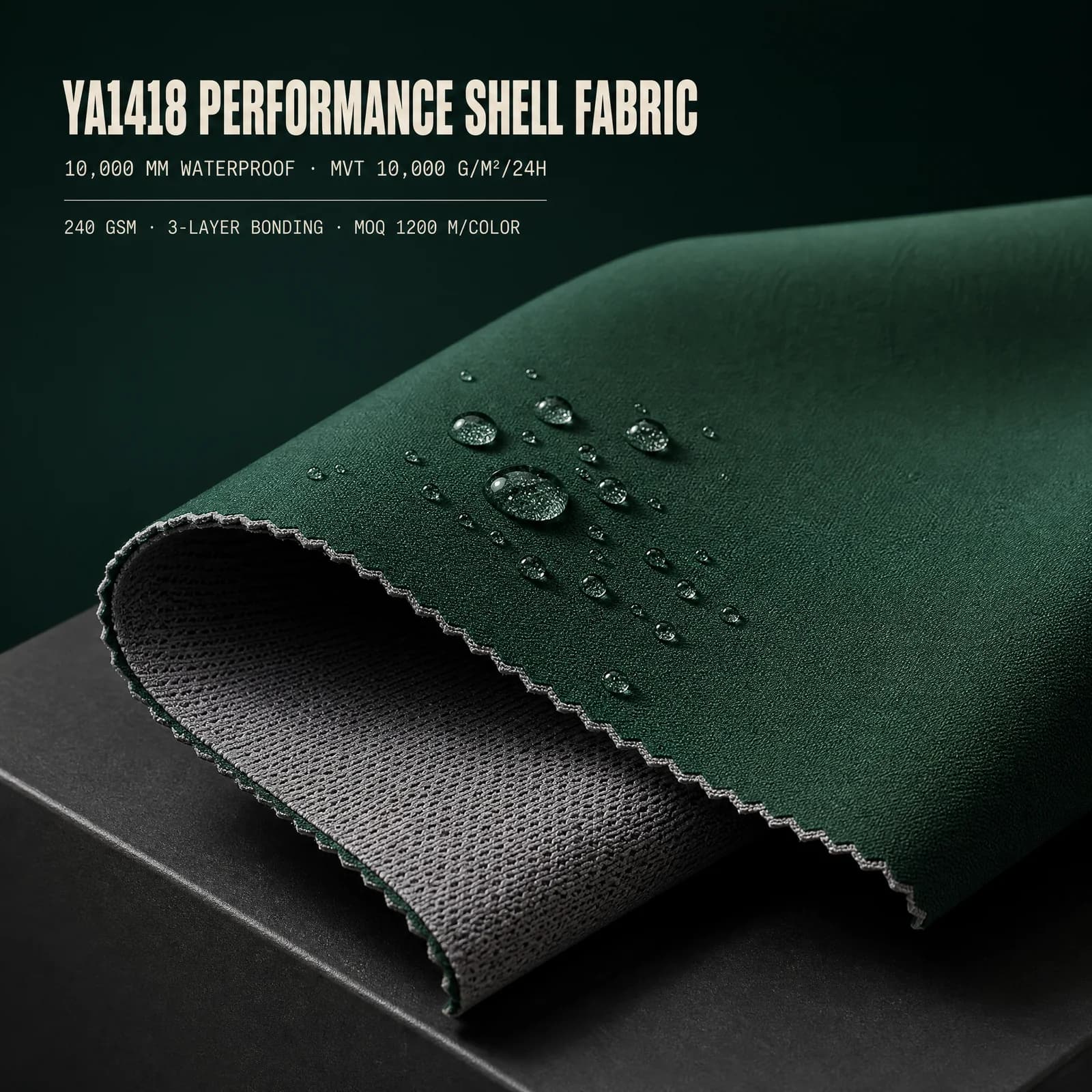
The short answer: two numbers, two different measurements
In a 10K/10K fabric description, the first 10K commonly refers to a 10,000 mm hydrostatic-pressure result used to describe resistance to water penetration. The second 10K commonly refers to a moisture-vapor transmission result of 10,000 g/m²/24h used to describe how much water vapor passes through a material under stated test conditions.
These numbers are useful only when they are attached to the exact fabric construction and an identified test method. They do not automatically guarantee the same result after the face fabric, membrane, adhesive, backing, finishing or test procedure changes.
What a 10,000 mm waterproof reference describes
Waterproof fabric is commonly evaluated by applying water pressure to a specimen and recording the point at which penetration occurs. A 10,000 mm result means the tested material reached the stated hydrostatic-head reference under that particular method and specimen condition.
It should not be treated as a universal promise for every production lot or finished jacket. Conditioning, test apparatus, specimen direction, face finish, lamination quality and whether the material has been washed or aged can all affect the reported result.
What a 10,000 g/m²/24h moisture-vapor reference describes
A moisture-vapor transmission value describes the mass of water vapor reported to pass through one square meter of material over 24 hours under defined laboratory conditions. It is a fabric-test reference, not a direct measurement of how dry every wearer will feel.
Comfort also depends on activity level, temperature, humidity, garment fit, ventilation, lining, base layers and the area covered by seam tape. Two fabrics carrying the same headline value may feel different when their structures or test methods are not the same.
What 10K/10K can and cannot tell a buyer
| The number can help describe | The number does not confirm by itself |
|---|---|
| A tested waterproof reference for a specific fabric | A completely waterproof finished garment |
| A tested moisture-vapor reference under stated conditions | Identical comfort in every climate or activity |
| A starting point for comparing shortlisted constructions | Direct comparability between different test methods |
| A target for sample development and quality control | Performance after washing, flexing or aging unless tested |
Why the test method must be shown
Waterproofness and moisture-vapor transmission can be measured using different standards, apparatus and environmental conditions. Results generated by different procedures should not be compared as though they came from one identical scale.
Ask the supplier for the method, unit, specimen description and whether the result belongs to the exact sampled construction. If wash durability, flex resistance or aging performance matters, include those conditions in the test plan before bulk approval.
Fabric performance is only one part of a waterproof jacket
A membrane fabric can reach a waterproof target while the finished garment still leaks through untreated seams, incompatible seam tape, zippers, pockets or construction details. The factory must select compatible sewing, seam-sealing and assembly methods for the approved laminate.
Ventilation and pattern design also influence comfort. Hood shape, pit vents, pocket bags, cuff adjustment and layering space can matter as much as a laboratory moisture-vapor number during real use.
Buyer checklist before approving a 10K/10K fabric
- Confirm the complete face, membrane and backing construction.
- Request the waterproof and moisture-vapor test methods, units and specimen condition.
- Check that the report refers to the exact sampled fabric rather than a similar membrane reference.
- Define whether results are required before or after washing, flexing or aging.
- Test lamination bond strength, DWR durability and seam-tape compatibility where relevant.
- Evaluate a finished garment prototype in the intended climate and activity level.
Use 10K/10K as a development target, not a shortcut
A 10K/10K specification can be a useful starting point for rain shells, hiking jackets and commuter outerwear when it matches the garment brief. The next step is to confirm the construction, method and durability requirements, then test the approved sample before using the numbers in product claims.
For example, the supplied YA1418 reference combines a polyester face, TPU membrane and 75D bird-eye backing at 240 GSM, with supplied 10K/10K values. Those values are presented as supplied references and remain subject to agreed methods and production confirmation.
Quick answers
10K/10K waterproof rating questions
What does 10K/10K waterproof mean?
It commonly describes a 10,000 mm hydrostatic-pressure reference for waterproofness and a 10,000 g/m²/24h moisture-vapor reference for breathability. The test methods and exact fabric construction must still be confirmed.
Is 10K waterproof enough for heavy rain?
A 10,000 mm fabric reference can be suitable for many rain shells and outdoor jackets, but it does not guarantee a waterproof garment. Seam sealing, zippers, pattern design, test method and performance after washing all affect the result.
Is 10K breathability good?
A 10,000 g/m²/24h moisture-vapor reference can be a useful starting point for active outerwear, but comfort also depends on the test method, climate, garment ventilation, lining, fit and activity level.
Can waterproof ratings from different test methods be compared directly?
Not reliably. Different standards, equipment and environmental conditions can produce different results. Compare values only after confirming the method, unit, specimen condition and fabric construction.