
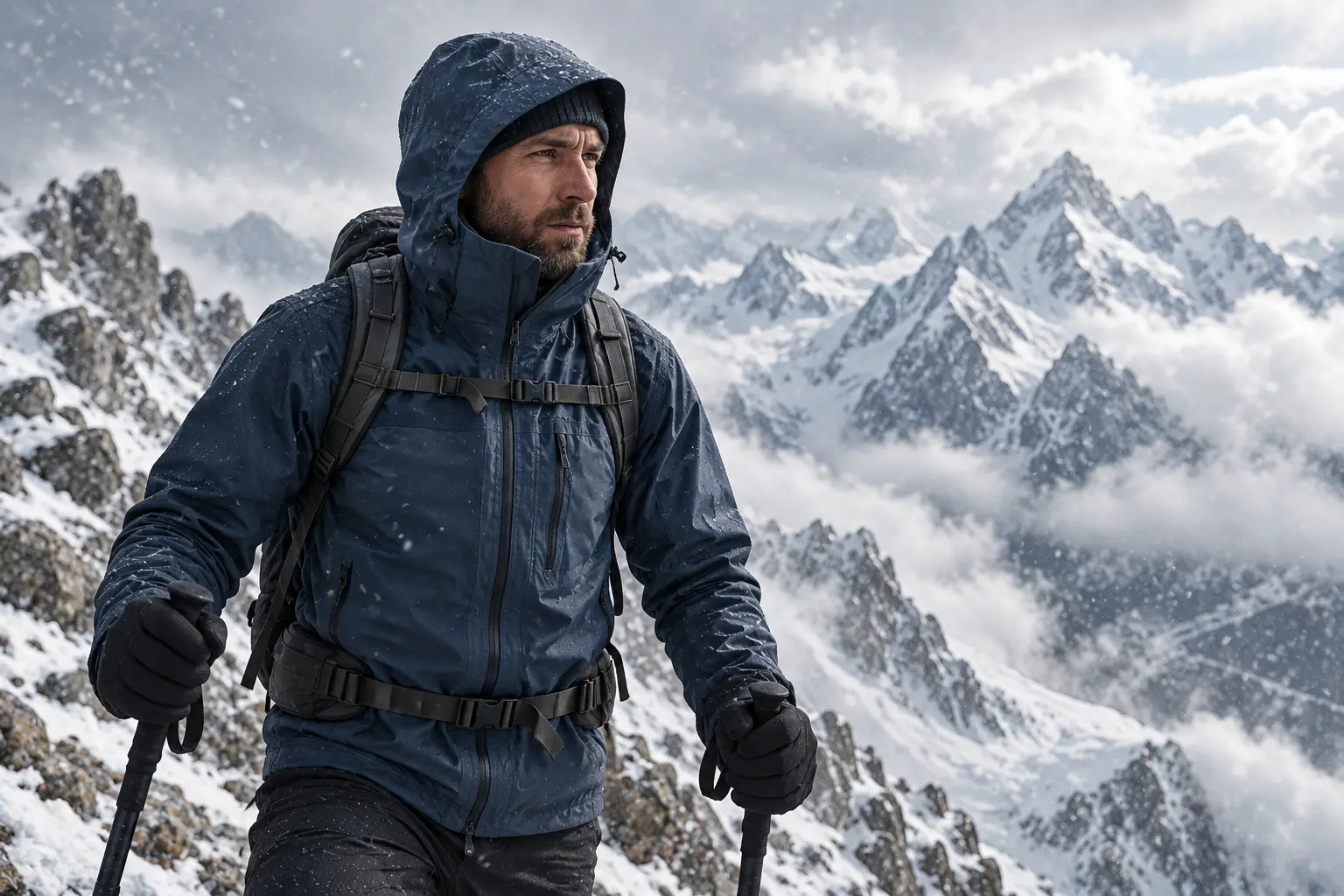
Softshell is a performance balance, not one fixed fabric
Softshell describes a group of woven, bonded and laminated fabrics designed to combine mobility, comfort and useful weather resistance. A common construction uses a polyester-spandex woven face bonded to a knit or microfleece back. Other versions place a breathable membrane between the face and backing to increase wind or water protection.
Because the term covers many structures, two fabrics sold as softshell can feel and perform very differently. One may be a light, breathable stretch woven for spring trekking; another may be a warm three-layer fabric for winter trousers. Buyers should define the garment and use conditions before comparing prices or test values.
Where softshell fabric is commonly used
- Hiking and trekking jackets that need stretch, wind resistance and a quieter hand than a hard shell.
- Outdoor and climbing pants where abrasion resistance and knee mobility are priorities.
- Ski and snow pants that combine a durable face with a warmer bonded backing.
- Hunting, fishing and outdoor workwear where comfort, surface durability and light weather protection matter.
- Travel and commuter jackets designed for frequent movement and mixed indoor-outdoor use.
Choose the construction around the garment
| Construction | Typical character | Common starting use |
|---|---|---|
| Single-layer stretch woven | Light, breathable, flexible; DWR can be added | Summer hiking pants, light jackets |
| 2-layer bonded softshell | Woven face plus knit or fleece back | Trekking jackets, warm pants |
| 3-layer membrane softshell | Face, membrane and backing combined | Windproof or weather-protective outerwear |
| High-stretch softshell | More elastic movement and recovery | Climbing pants, active ski apparel |
Weather resistance must be specified carefully
A dense woven face and durable water-repellent finish can resist light rain and splashes, but water repellency is not the same as waterproofness. For rain-focused garments, the fabric normally needs a coating or membrane plus appropriate seam construction in the finished garment.
If waterproof and breathability values are important, ask which test method was used and whether the result applies to the exact sampled construction. Membrane type, bonding adhesive, face fabric and backing all influence performance, hand feel and durability.
Weight, stretch and backing affect comfort
GSM alone does not define warmth or durability. Yarn size, weave density, backing type and finishing can make two fabrics of similar weight behave differently. A fleece back adds insulation and next-to-skin comfort but may be too warm for high-output activities. A lighter knit back reduces bulk and can improve year-round versatility.
For pants and fitted jackets, confirm stretch direction and recovery. Two-way stretch may be sufficient for many trekking trousers, while four-way stretch can support deeper movement. The approved sample should also be checked after repeated extension because high initial stretch without recovery can lead to bagging at knees and elbows.
Questions to send with your sample request
- What garment will be made, and in which season or climate will it be used?
- Do you need single-layer, bonded 2-layer or membrane 3-layer softshell?
- What are the target composition, weight, width, stretch direction and hand feel?
- Is the priority warmth, breathability, wind resistance, water repellency or waterproofness?
- Which color quantity, MOQ, testing standard and delivery schedule apply to the project?
A useful development sequence
Begin with two or three constructions rather than a large undirected swatch set. Compare them in the intended garment pattern, then refine weight, backing, color and finishing after the first fit and wear evaluation. This keeps sampling focused and makes performance-versus-cost decisions easier to document.